Laura Richardson
School of Kinesiology
In Fall 2025, the School of Kinesiology launched KINESLGY 302, a transformative, faculty-led study abroad course focused on healthy aging in the Nicoya Peninsula, the only “Blue Zone” (region of exceptional longevity) in Central America. With generous grant support, 18 UM students immersed themselves in the interdisciplinary study of aging, blending rigorous academic analysis with deeply personal, hands-on experiences.
Prior to travel, students conducted research into global aging, gerontology, and demographic methods, exploring scientific evidence and societal perspectives. They examined foundational work on Blue Zones, with special emphasis on Dr. Michel Poulain, Belgian demographer and co-founder of the Blue Zone concept, whose groundbreaking research identified regions worldwide where populations live significantly longer, healthier lives.
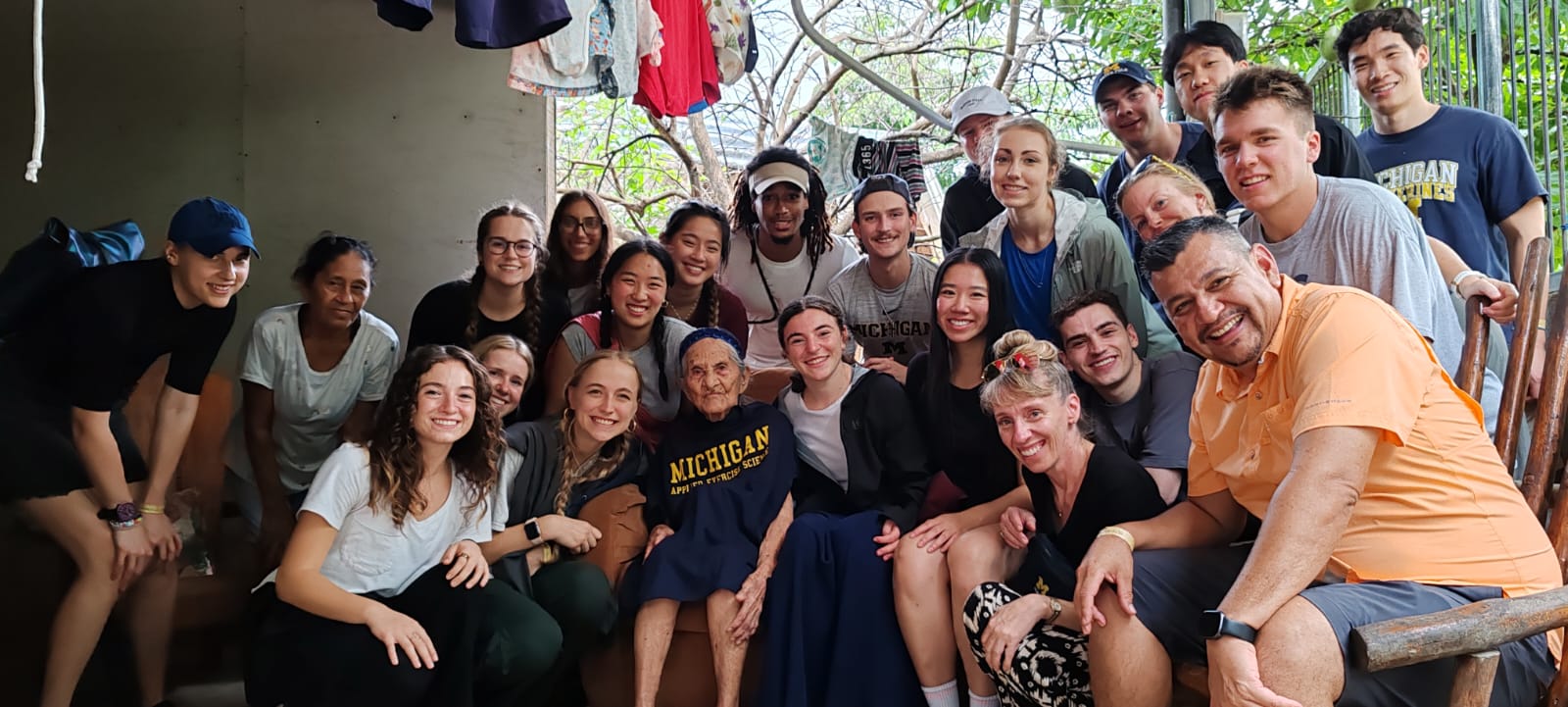
 During a ten-day expedition to Costa Rica, our group engaged directly with Nicoya’s centenarian community, guided by a local researcher with close connections to the centenarian community. Highlights included interviews with remarkable residents, such as a 104-year-old rancher whose vitality and independence inspired all, and a dinner at the home of the local minister of health, providing unique insight into Costa Rica’s infrastructure supporting longevity. Students used journaling, interviews, and participatory research to deepen their understanding of biopsychosocial factors and cultural influences on aging.
Experiential learning extended beyond research: students joined in traditional dances, cooked local meals, hiked forests and volcanoes, yoga, zipline lining, enjoyed waterfalls, swam in the Pacific and connected with Nicoya’s “Pura Vida” ethos, discovering firsthand the importance of social connection, diet, simplicity, and the environment for well-being. These field excursions reinforced academic concepts and fostered greater self-awareness, empathy, and global perspective.
Post-travel, students synthesized their findings in multimedia presentations and reflective essays, critically analyzing epidemiological data, challenging cultural biases, and developing innovative research methodologies. The program exceeded its goals, sparking intellectual curiosity and equipping participants with skills and insights to advance the study of aging and wellness.
For a firsthand look at this transformative experience, we invite you to watch a student-created video recap of the trip, available now on YouTube (link here).

