Lei Zuo
College of Engineering
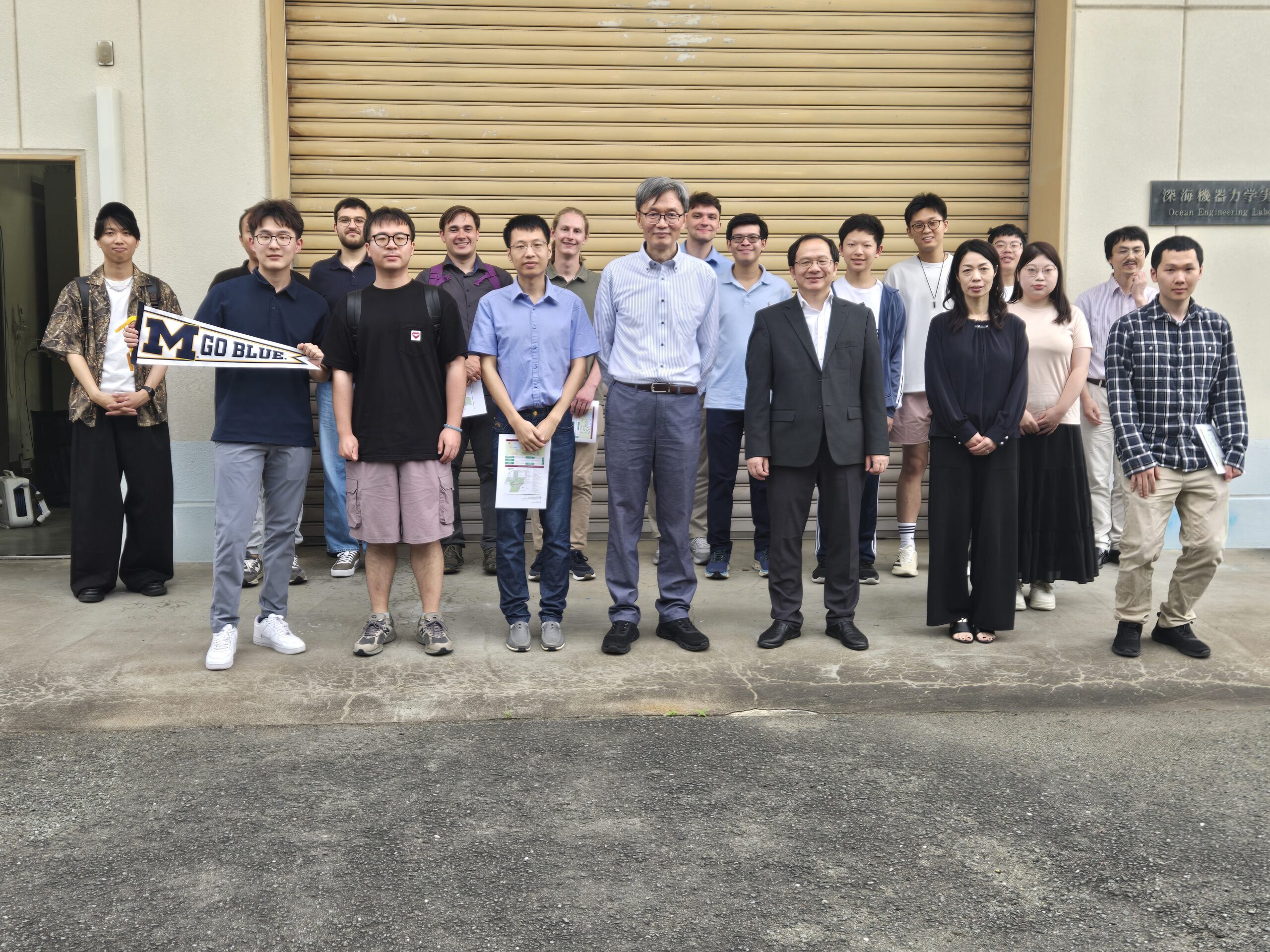
The Marine Energy Faculty-Led Study Abroad Program offered University of Michigan students an immersive educational experience exploring the intersection of marine energy, advanced shipbuilding, and the emerging blue economy in Japan and South Korea. Building upon classroom instruction during the 2026 spring semester, the program combined technical site visits, academic exchanges, industrial engagement, and cultural immersion to expose students to leading research and engineering institutions across both countries. The experience also created opportunities for future international collaboration by connecting students directly with faculty, researchers, graduate students, and practicing engineers.
In-country experiences combined technical learning with direct engagement in world-class research and industrial facilities. Students visited the Hibikinada Wind Farm, the largest offshore wind farm in Japan, Samsung Heavy Industries’ shipyard, research facilities, experimental wave basins, and water tunnels in Tokyo, Fukuoka, and Daejeon, as well as sustainability demonstration sites in Kitakyushu. Through seminars, laboratory tours, technical discussions, student research presentations, and collaborative activities, students gained firsthand exposure to wave, wind, and offshore energy technologies, advanced experimental facilities, large-scale shipbuilding, and systems engineering. Beyond technical activities, students explored museums, historical landmarks, public transportation systems, and local communities, allowing them to examine the cultural, historical, and societal contexts that influence engineering practices in Japan and South Korea. Daily reflection logs, photos, and final reports documented their technical learning, cultural observations, and professional growth throughout the program.
Upon returning, students brought back a deeper understanding of marine engineering, a broader global perspective on technological innovation, and increased confidence navigating international environments. The program encouraged students to examine differences in research culture, infrastructure investment, manufacturing capabilities, sustainability practices, and national innovation strategies between the United States, Japan, and South Korea. Students also developed professional connections with universities, government research institutes, and industry partners, identifying opportunities for future graduate study, international research collaborations, and careers in marine renewable energy, offshore engineering, and shipbuilding.
Learning Objectives

