
Home
/
Resilient Traveling Resiliency

Resiliency

International learning and fieldwork offer valuable growth opportunities, alongside expected challenges. The five factors below support building resilience.

Self-awareness

Self-awareness is a core factor in resilient people. It refers to the knowledge of one’s individuality, including thoughts, emotions, and behaviors.

 

Connection

Feeling alone is one of the primary concerns for those traveling abroad. Connectivity to others is closely linked to awareness, regulation, flexible thinking, and optimism.

 

Flexible thinking

Rigid ways of thinking give us less choice in our behaviors, leading to more subjective distress. Flexible thinking allows for flexible coping and a balanced perspective.
 

Self-regulation

The ability to acknowledge and express distress in a way that promotes well-being. It requires self-awareness, flexible thinking, connection, and optimism.

 

Optimism

An optimistic attitude promotes psychological well-being. It helps you to challenge unhelpful thinking, improve mood, and identify what is within your control.

What should I know about STRESS?

The nature of fieldwork in international placements is stress-inducing. One is expected to leave behind their normal routine and connections, move into new surroundings where even the food is different, and work on projects within a designated amount of time.

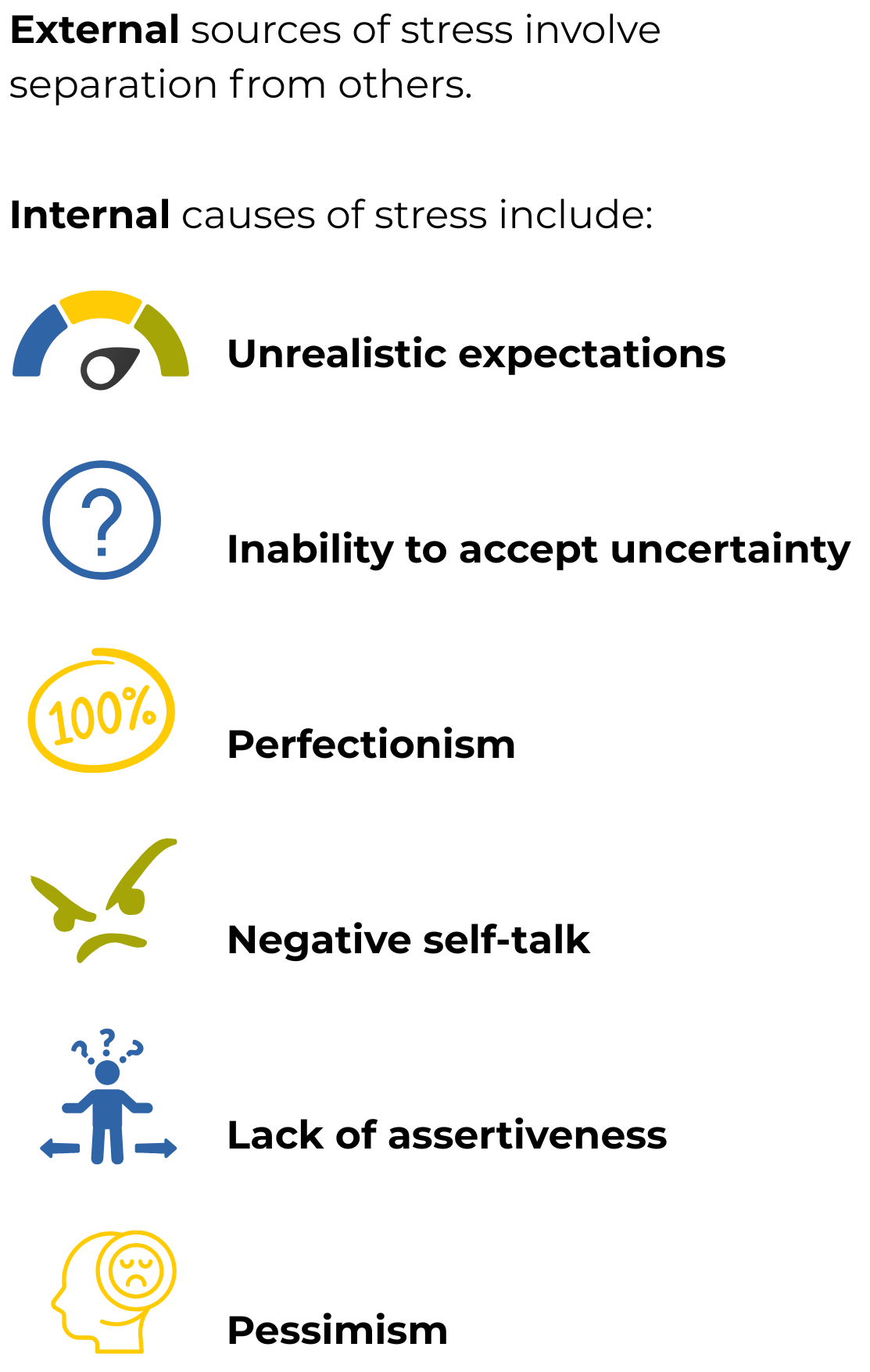
The nature of stress has both internal and external influences, it is a process. While it is usually brought on by external events, there is an internal element in our coping and thinking that either helps us manage stress or makes it more distressing.

Therefore, if we interpret the stressful or adverse events that we will likely encounter in the field with a rigid, pessimistic viewpoint, we lose the chance and choice to do something different.

What should I know about COPING?

Thinking, Feeling, Behavior

Coping refers to the actions taken by an individual to solve personal or interpersonal problems and tolerate stress. In general, coping is an adaptive, healthy response to problems. If given the opportunity, we are capable of making healthy, helpful coping choices.

Rigid ways of thinking lead to a rigid way of coping. It is likely that if we have one way of thinking about a situation, then we feel and act in accordance with our thoughts. Overdependence on one type of coping strategy is common.

What do you rely on for coping when distressed?
What are the dangers of over-relying on this inflexibility?
What would bring balance to your coping?